
Science Meets Storytelling
How Hello Humpback uses AI
Image Recognition
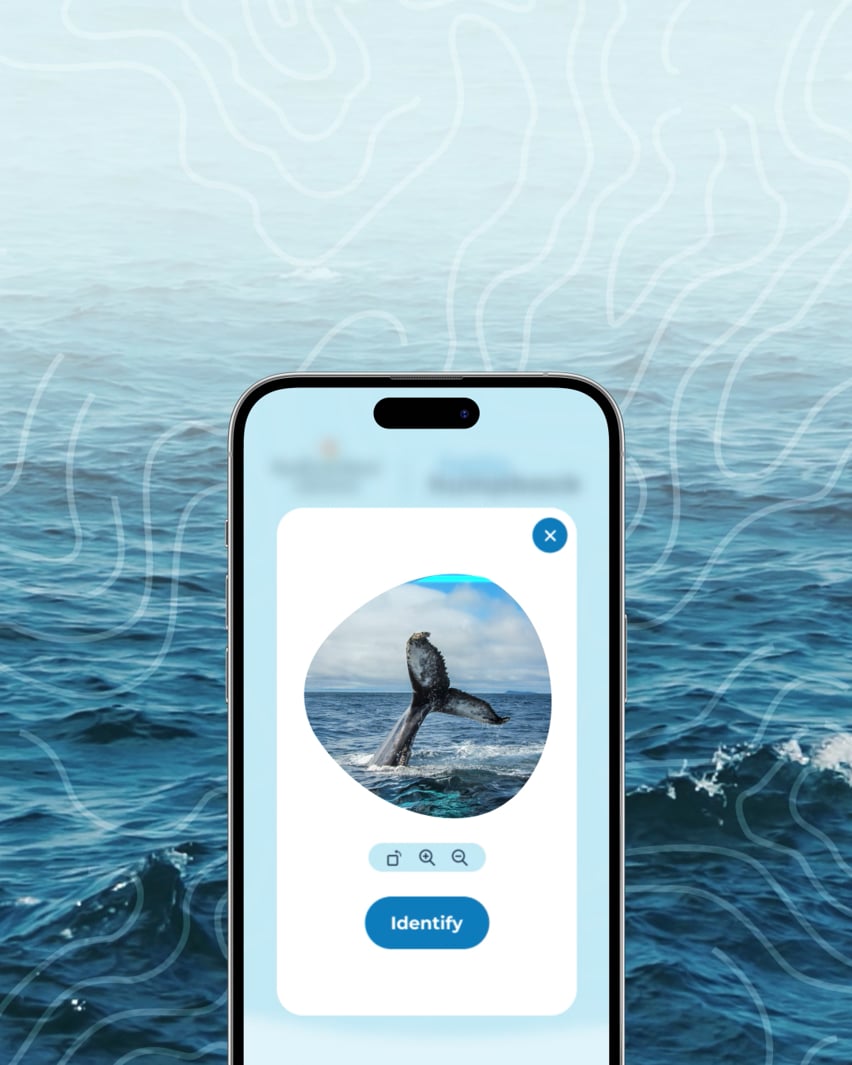
Hello Humpback is powered by the same image recognition technology as our marine science and conservation partner, Happywhale. It analyzes sighting photos to match them against the thousands of whales in their database.
Tracking humpbacks via fluke patterns has been happening for decades – that's why Hello Humpback has stories dating back to the 1970s, like Jena and Roland. But before computers could help, scientists had to manually inspect and match each tail to the limited pool of images they could access. Emerging tech has helped conservation organizations connect datasets, find matches faster and match across even bigger distances in geography and time.
Story Generation
Hello Humpback's stories are written by a meticulously trained AI model. Our story generator has lots of practice interpreting real dates and locations within Happywhale's scientific database, and uses that data to craft the unique story of every individual humpback spotted here in Newfoundland and Labrador.
Here are a few details about what our story generator does and doesn't do:
The dates and locations in each whale's story are input directly from Happywhale's scientific database. On each whale's story page, you'll find a "sightings" section beneath the story text where you can see a list of each sighting, or click through to that whale's page on Happywhale for even more details. Hello Humpback also references any notes from their database, which are full of rich details, from how close they were to shore, to whether they were spotted with a calf by their side.
There are two ways Hello Humpback determines names, neither of which uses AI. Some humpbacks in Happywhale’s database already have names assigned by the scientific community. Hello Humpback always respects these and pulls them in directly. For whales known only by ID numbers, Hello Humpback assigns them a random name from a pre-set list.
Some humpbacks also have a known gender. Typically, these are female humpbacks identified by being spotted with a calf – in humpback culture, calves stay very close with their mothers for up to a year. For all other whales, Hello Humpback randomly assigns a gender for naming and pronoun purposes.
If a whale’s name or gender is updated in Happywhale’s records, Hello Humpback will update their story to reflect this most recent and accurate information.
Like many Newfoundlanders and Labradorians, our story generator loves to add a flourish or two when telling a tale. These small touches give a sense of place and adventure to the real data as it crafts each story – like a cloudy sky over Bonavista Bay, or a delighted onlooker on a nearby fishing stage.
When adding details like weather, time of day, a whale’s particular mood, or details like a group of seabirds overhead or a scent of pine in the air, our generator has instructions to reflect as accurately as possible the truth about the places and dates in the real data.
Even though Hello Humpback contains thousands of stories – a lot more than one writer could keep up with – it’s been designed to limit story generations responsibly. Our AI story generator doesn’t write new content every time a certain whale is scanned or searched. Each of the whales has one fixed page, so everyone gets to read the same story. When you submit photos of your new sightings and they’re verified by our scientific partners, only that specific whale’s story gets a rewrite, so that everyone following along can go read the new version and see what they’ve been up to.